
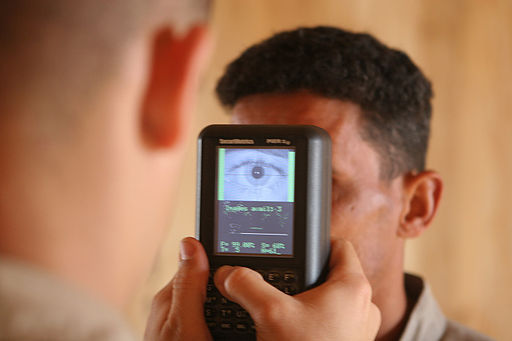
 The FBI is currently working on a new identification system, called Next Generation Identification, which will be bigger, better, and faster than IAFIS. Next Generation will have a larger storage capacity than IAFIS, and it will be able to hold fingerprint data as well as multimodal biometric data. This additional data would include iris recordings and palm prints. What’s more, Next Generation will also have room to hold future biometric technologies, like a person’s voice or gait, as these technologies become available and more reliable.
The new system will also speed up the time it takes for results to come in for criminal fingerprints. The response time with IAFIS takes about two hours to return a set of ten fingerprints; it will take approximately ten minutes with Next Generation. A more rapid response time will give a significant advantage to law enforcement officers in the U.S., as well as American soldiers overseas, and allow them to quickly assess the level of threat during an encounter with an individual.
Moving beyond fingerprints as a form of identification will benefit investigation of crimes, hopefully leading to faster identification of criminals. For example, Next Generation will contain palm prints, in order to help catch criminals who leave behind palm prints at crime scenes. It will also, hopefully, work in conjunction with other U.S. biometric systems and even those of some foreign partners.
The FBI fingerprint department has conducted Privacy Impact Assessments to determine what data will be gathered, how it will be shared, accessed, and stored, to ensure that it will not pose a threat to individual privacy. NGI will be used by local, state, and federal partners.